
Care Settings
Hospice in assisted living or nursing homes
Learn how hospice can support patients in assisted living, nursing homes, and facility settings with care coordination and family guidance.
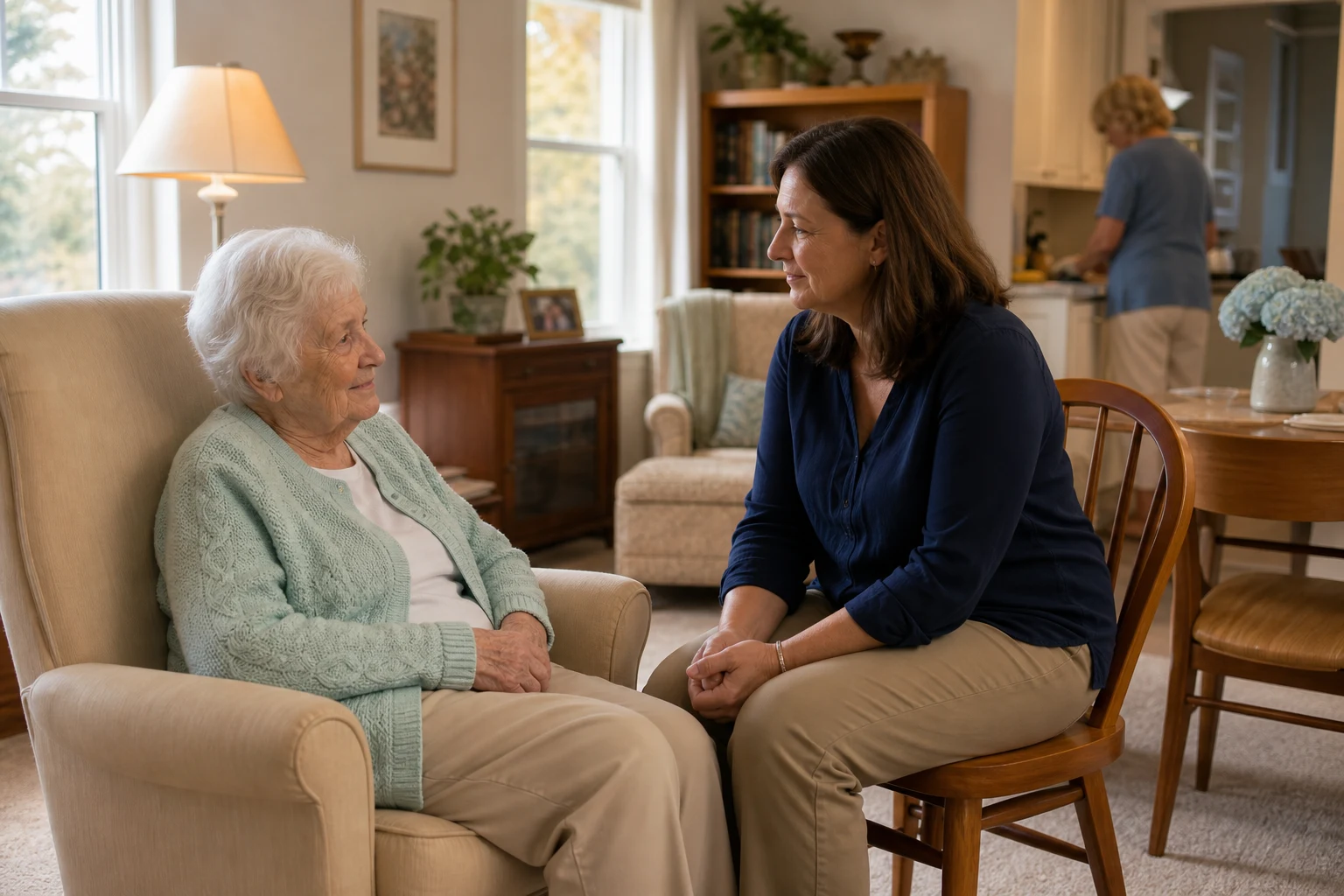
Hospice care can often support patients in assisted living communities, nursing homes, and other facility settings, not only private homes.
Families sometimes assume hospice means the patient must move. In many cases, hospice can come to the place where the patient already lives. The hospice team adds comfort-focused clinical and emotional support while facility staff continue their usual role.
How hospice works in a facility
Hospice may coordinate with facility nurses, physicians, discharge planners, caregivers, and family members. The care plan may include hospice nursing visits, aide support, symptom management, medications and equipment related to the terminal diagnosis, social work, chaplain care, volunteer support, and family education.
Good communication matters because multiple people may be involved in day-to-day care.
When families should ask about hospice
Hospice may be worth discussing when a resident has repeated hospital visits, increasing weakness, infections, falls, weight loss, worsening dementia, unmanaged symptoms, or a growing need for comfort-focused care.
Questions to ask
- Can hospice support the patient in the current facility?
- How will the hospice team communicate with facility staff?
- Who handles medications, supplies, oxygen, or equipment?
- Who should family members call after hours?
- What changes should trigger a call to hospice?
Caritas Hospice can help families and facility teams in Dallas-Fort Worth understand referral steps and care coordination.
What hospice does not replace in a facility
Hospice does not replace the facility itself. Assisted living, memory care, and nursing facilities still provide the living environment and daily services covered by the facility agreement. Hospice adds specialized comfort-focused care related to the terminal illness and plan of care.
Families should ask what hospice covers, what the facility continues to provide, and whether room and board or private caregiving costs remain separate.
Communication should be explicit
Facility-based hospice works best when everyone knows who calls whom. The family should know how often hospice visits are expected, who receives visit updates, how medication changes are communicated, and what symptoms should trigger a call to hospice.
If the resident has dementia, heart failure, COPD, cancer, or neurological decline, the facility may notice daily changes that are important for hospice eligibility and care planning.
Before a referral conversation
Gather the primary diagnosis, physician information, recent hospital or facility notes, current medications, and a short summary of recent decline. If the family does not have all of that, they can still call and ask what is needed.
How Caritas Hospice can help
Caritas Hospice can coordinate with families and facility teams across Dallas-Fort Worth when hospice may be appropriate in assisted living, memory care, or nursing home settings. A referral conversation can clarify who should be involved, what information is needed, and how care would begin.
Families should ask the facility and hospice team to communicate early. Clear coordination helps avoid duplicated messages, missed updates, and confusion about who handles each part of care.
About this guide
Written by Caritas Hospice Editorial Team
Published July 9, 2026
Sources
This article is for general educational information and does not replace medical advice or an individual hospice eligibility assessment.