
Diagnosis-Specific Hospice
Hospice for stroke and neurological decline
Learn when hospice may help after stroke or neurological decline, including signs, symptoms, care settings, and referral questions.
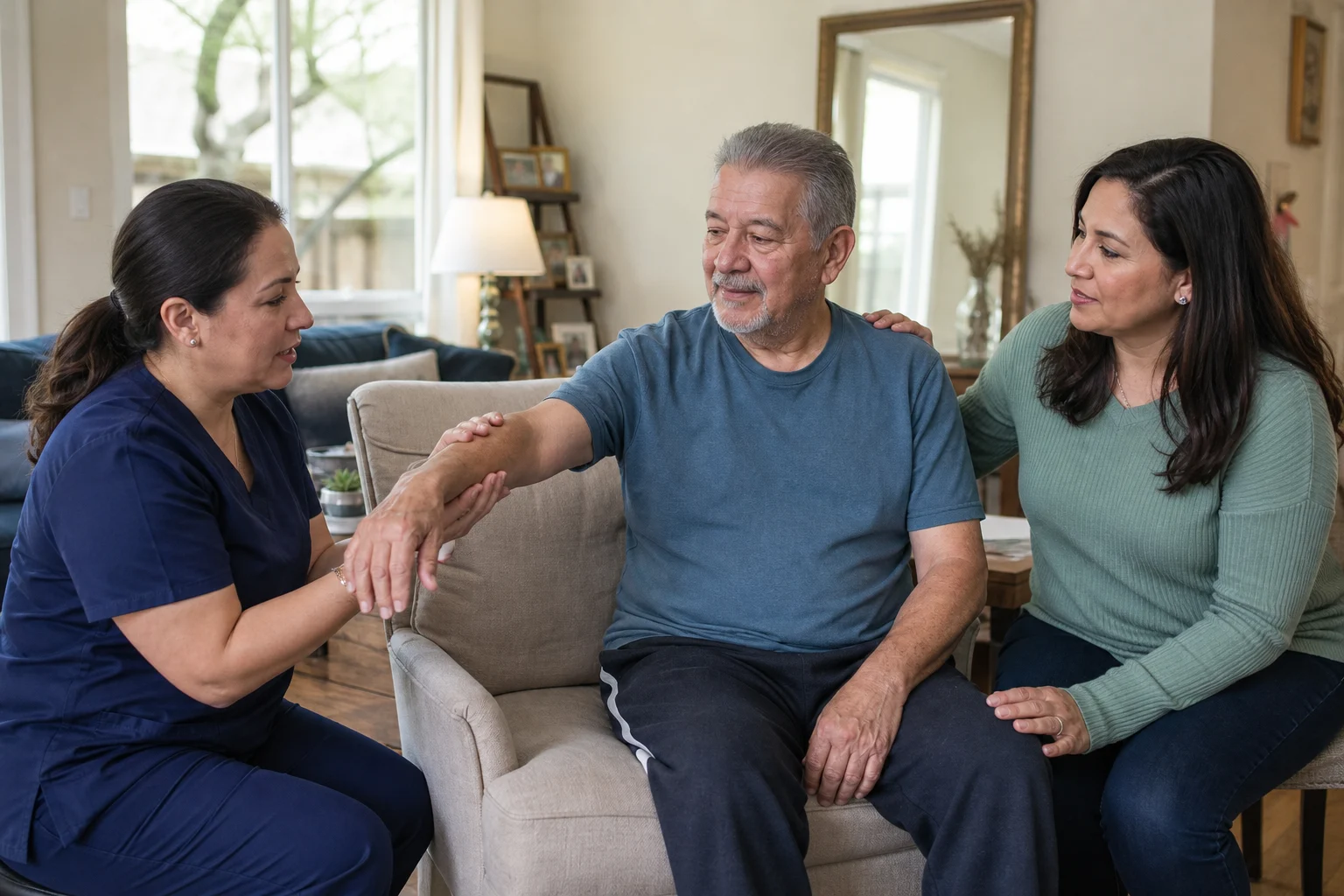
Hospice may be appropriate for some patients after a serious stroke or progressive neurological decline when comfort-focused support becomes the right next step.
Stroke and neurological illness can change a family's life quickly. Some patients improve with rehabilitation and ongoing medical care. Others continue to decline, lose function, develop swallowing problems, have repeated infections, or become more dependent on others for daily care.
Hospice is not based on one symptom alone. It is considered when the overall illness pattern suggests that comfort, dignity, and family support should become the focus.
Signs to discuss with a care team
Families may want to ask about hospice when a patient has neurological decline with:
- Severe weakness or loss of function
- Difficulty swallowing or repeated aspiration concerns
- Weight loss, reduced intake, or dehydration concerns
- More time in bed or a chair
- Repeated infections, wounds, or hospitalizations
- Communication changes that make symptoms harder to assess
- Pain, shortness of breath, agitation, or distress
The physician and hospice team can review whether the patient may meet hospice criteria.
What hospice can support
Hospice focuses on comfort and quality of life. For neurological decline, the care plan may include nursing assessment, pain and symptom management, medication review, supplies and equipment related to the care plan, hospice aide support, social work, chaplain support, and caregiver education.
Families often need help understanding what to do when swallowing changes, breathing changes, agitation increases, or the patient can no longer describe discomfort clearly.
Palliative support after stroke or neurological decline
Neurological decline can affect mobility, swallowing, communication, alertness, and the ability to describe pain. The hospice team looks at which functions changed, how quickly they changed, and what the patient can still express.
The plan may coordinate nursing assessment, prescribed medicines, equipment, aide care, and caregiver teaching around those losses.
A sudden neurological change still requires prompt assessment under the patient’s emergency and hospice plan.
Caritas provides palliative support here only for hospice patients. The team cannot promise recovery, symptom elimination, eligibility, or admission; recommendations follow an individual clinical review.
Care at home or in a facility
Hospice can often support the patient wherever they live, including a private home, assisted living community, nursing facility, or other care setting. If the patient lives in a facility, hospice coordinates with facility staff and the family so everyone understands the care plan.
Questions before referral
- What has changed since the stroke or neurological decline began?
- Has the patient had recent infections, hospitalizations, or swallowing problems?
- What symptoms are hardest for the family or facility to manage?
- What equipment or supplies are already in place?
- Who is the physician or care team contact?
How Caritas Hospice can help
Caritas currently provides hospice in the Fort Worth area while Dallas-area expansion is underway. A family may discuss a referral and confirm location availability without a promise of eligibility or acceptance.
Why neurological decline can be hard to judge
After a stroke or neurological event, families may hear different possibilities: rehabilitation, recovery, long-term care, or comfort-focused support. The right path depends on the patient, the severity of decline, and whether the condition is improving, stable, or getting worse.
Hospice may enter the conversation when the patient is not recovering as hoped, when symptoms are difficult to manage, or when the burden of repeated hospital care no longer matches the patient's goals.
What families can track
Families can help the care team by tracking changes in swallowing, speech, alertness, infections, nutrition, wounds, breathing, pain, and ability to transfer or sit safely. Recent hospitalizations, emergency visits, falls, or aspiration concerns are also important.
These details help the physician and hospice team understand whether the patient may need comfort-focused support.
Supporting caregivers
Neurological decline can create demanding hands-on care needs. Families may need help with turning, bathing, transfers, medication schedules, skin care, and recognizing signs of distress when the patient cannot communicate clearly. Hospice can teach caregivers what to watch for and who to call when symptoms change.
The goal is to reduce uncertainty and help the patient remain as comfortable and dignified as possible in the current care setting.
About this guide
Written by Caritas Hospice Editorial Team
Published July 10, 2026 · Last updated August 19, 2026
Sources
This article is for general educational information and does not replace medical advice or an individual hospice eligibility assessment.