
Diagnosis-Specific Hospice
Hospice for dementia and Alzheimer's in Dallas-Fort Worth
Learn when hospice may help dementia or Alzheimer's patients in Dallas-Fort Worth, including signs, care settings, and referral steps.
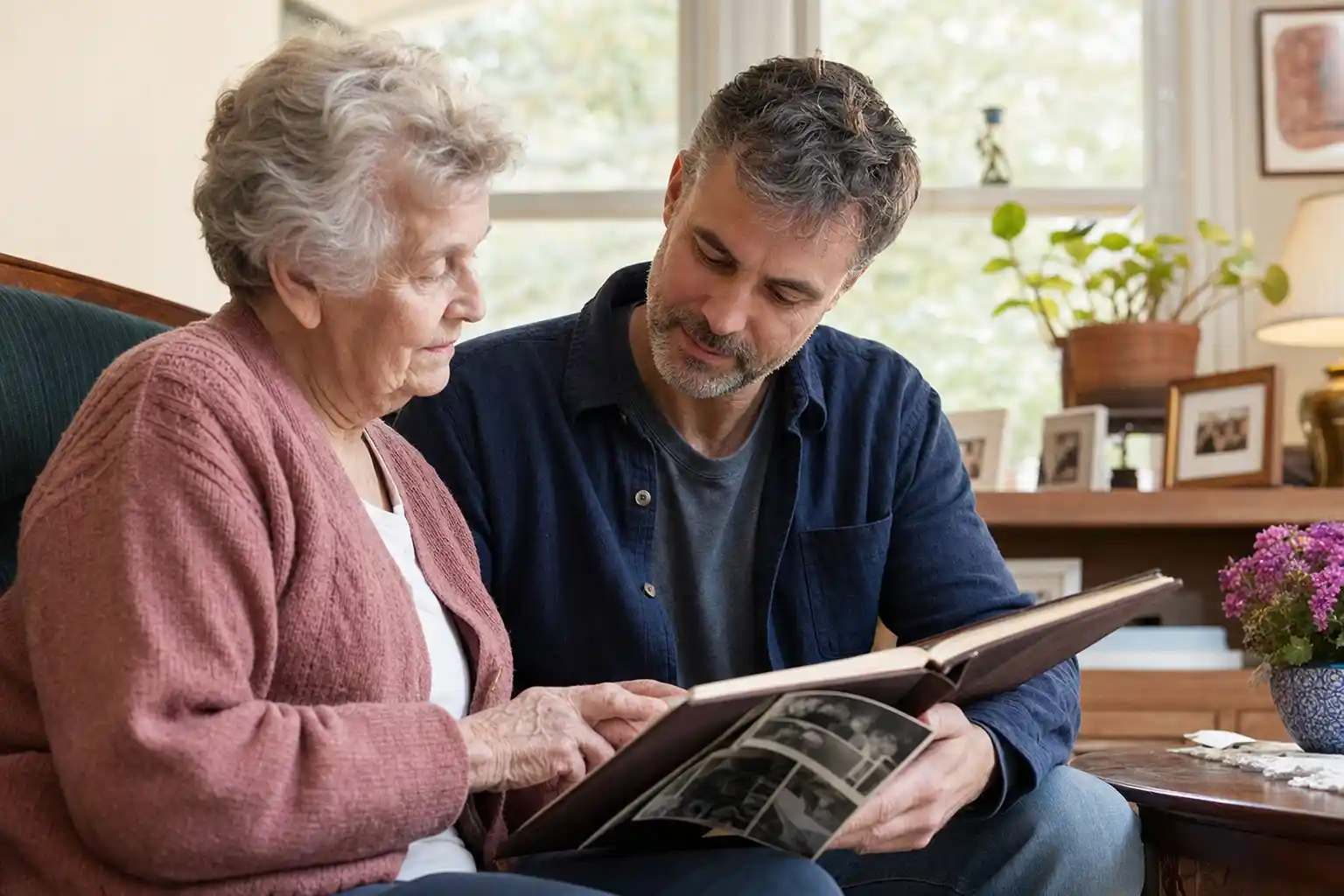
Hospice may be appropriate for some patients with advanced dementia or Alzheimer's disease when decline is progressing and comfort-focused support is needed.
Dementia changes slowly, which can make hospice timing difficult for families. A loved one may have lived with memory loss for years before the family starts to see a different pattern: more dependence, less eating, repeated infections, weight loss, falls, pressure injuries, or more time sleeping.
Hospice eligibility is a clinical decision. Families do not need to decide alone. The goal is to recognize when the patient may need more comfort-focused support and ask whether a hospice assessment is appropriate.
Signs families often notice
Families and memory care teams may consider a hospice conversation when the patient has advanced dementia or Alzheimer's disease and changes such as:
- Needing help with most or all daily care
- Difficulty walking, sitting up, swallowing, or speaking
- Reduced appetite, weight loss, or dehydration concerns
- Repeated infections, including urinary, respiratory, or skin infections
- Pressure injuries or fragile skin
- Increased sleeping, weakness, or less interaction
- Hospital visits or facility transfers that are becoming harder on the patient
These signs do not automatically mean hospice should start. They are reasons to ask for guidance.
What hospice can support
Hospice focuses on comfort, dignity, and family guidance. For dementia patients, support may include nursing assessment, symptom management, medication review, hospice aide support, supplies related to the care plan, social work, chaplain support, and caregiver education.
The team can help families understand what changes may be expected, when to call, and how to respond when eating, swallowing, breathing, agitation, or infections become difficult.
Palliative observation when dementia limits communication
Advanced dementia may limit spoken descriptions of pain or distress. The nurse and caregiver can compare nonverbal signs such as guarding, grimacing, changed movement, agitation, sleep disruption, or a new response during personal care.
Swallowing changes need clinical review because they can affect comfort, eating, and medication planning. The team considers the patient’s current ability, prior wishes, care setting, and goals before recommending a change.
For Caritas patients, this palliative work belongs to the hospice plan of care. It does not replace clinical assessment, guarantee that distress will resolve, or create a separate program outside hospice enrollment.
Where care can happen
Dementia hospice care can often happen wherever the patient lives. That may be a private home, assisted living community, memory care community, nursing facility, or another familiar setting. The hospice team coordinates with the family and care setting so the patient can receive support without unnecessary disruption when possible.
If the patient lives in memory care or a nursing facility, ask how the hospice team communicates with facility staff, who calls the family with updates, and how after-hours needs are handled.
Questions to ask before referral
- What changes have we seen in eating, weight, walking, speech, or alertness?
- Has the patient had recent infections, falls, wounds, or hospital visits?
- Who is the primary physician or facility contact?
- What symptoms are hardest to manage right now?
- Who should be included in the care planning conversation?
How Caritas Hospice can help
Caritas serves the Fort Worth area, with Dallas-area expansion underway. Families can call to organize what has changed, learn what a referral requires, and confirm whether Caritas currently serves the patient’s location.
If your loved one is in a memory care community, assisted living community, nursing facility, or home setting, Caritas can explain how hospice coordination works in that setting.
What families should expect from the first conversation
The first conversation is usually about the pattern of decline. Families can describe what has changed over the last few weeks or months, where the patient lives, who the physician is, and what symptoms or care needs are becoming harder to manage.
Useful details include recent infections, hospital visits, falls, swallowing changes, weight loss, wounds, agitation, medication changes, and whether the patient needs more help with transfers, bathing, dressing, or eating. If the patient lives in a facility, the facility team may be able to share notes that help clarify the clinical picture.
How hospice helps the family make decisions
Dementia can make decisions emotionally difficult because the patient may not be able to clearly explain pain, fear, hunger, shortness of breath, or discomfort. Hospice helps the family and care team watch for nonverbal signs of distress and respond with a comfort-focused plan.
The team can also help families think through hard moments, such as repeated hospital transfers, infections, eating changes, and whether the current care plan still matches the patient's condition and goals.
Questions to ask a dementia hospice provider
- How do you assess comfort when the patient cannot explain symptoms clearly?
- How do you coordinate with memory care or nursing facility staff?
- Who teaches the family what changes to expect?
- How are agitation, pain, shortness of breath, or swallowing concerns handled?
- What should trigger an after-hours call?
About this guide
Written by Caritas Hospice Editorial Team
Published July 10, 2026 · Last updated August 19, 2026
Sources
This article is for general educational information and does not replace medical advice or an individual hospice eligibility assessment.